About

A small, deliberate coaching practice — grounded in the science, plainly spoken.

In short

Brainy Day Coaching is a neurodivergent-affirming coaching practice for autistic and ADHD teens and adults, run by Lee Bess, Ph.D. — an evolutionary biologist turned coach. Sessions are by video, weekly or biweekly. Most clients arrive on referral. 2SLGBTQIA+ affirming. Currently taking new clients in OR, WA, and CA.

Founded 2018 | Solo Practice | 15-18 Active Clients | Based in Eastern Oregon

§ i. the practice

Brainy Day

The practice exists because the existing landscape is uneven. Coaching for neurodivergent adults skews wellness-y, productivity-y, and short on rigor. The therapeutic side is often excellent but isn’t always what’s needed — sometimes a person doesn’t need processing, they need a strategist who actually understands how their nervous system works.

Brainy Day sits in that gap. The work is academic in the best sense: serious without being sterile, precise without being cold. We use the language of the community — demand-avoidant, PDA-profile, sensory load, capacity — because that language is correct, not because it’s trendy.

Referral-led

Most clients arrive through a therapist, social worker, or other professional. The practice doesn’t advertise.

Refer-out culture

If coaching isn’t what you need, we’ll help you find the right person. A working list is maintained quarterly.

Small caseload

Fifteen to eighteen active clients at a time. The cap is deliberate; it makes thoughtful notes possible.

Quietly queer

2SLGBTQIA+ affirming as a baseline, not a feature. There when you need to see it; out of the way when you don’t.

§ ii. who runs it
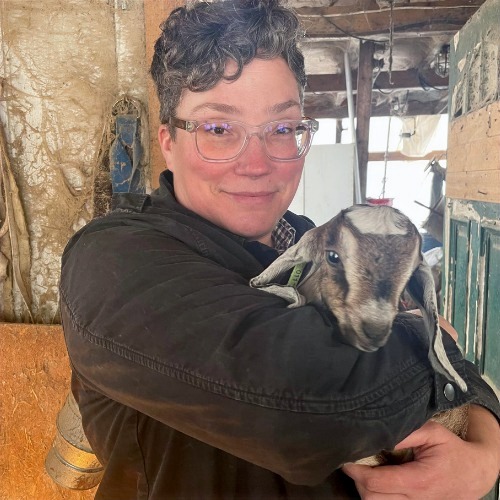
Lee Bess at their desk
Lee Bess, Ph.D. (they / them) — at home with Pearl, the smallest of the three barn goats. Photo: S. Kavanaugh, 2026.

Lee Bess, Ph.D. · they/them · founder

An evolutionary biologist turned coach — which is to say, a person who finds it hard to make claims without evidence.

Lee spent eight years in research — a Ph.D. on the evolution of social behavior in corvids, then a postdoc — before leaving to coach full-time. The throughline is the same: figuring out, plainly and patiently, how a particular kind of mind operates in a particular kind of environment.

They were diagnosed AuDHD in their late thirties, which informs the work but isn’t the whole of it. They live on a few acres in eastern Oregon with a partner, three goats, and a not-insignificant tomato problem.

Read more about Lee

The path to coaching was indirect. Late diagnosis put Lee inside the experience of being underestimated, mis-managed, and politely talked over by people who meant well; the science training meant they noticed how thin the literature on neurodivergent adult coaching actually was. Brainy Day started as a side practice in 2018 and went full-time in 2021.

The work draws on cognitive science, motivational interviewing, the PDA literature out of the UK, and the lived experience of a small number of long-standing clients who have generously let Lee learn alongside them.

Outside the practice: long walks, citation tracking as a hobby, a quietly maintained collection of field notebooks, and the goats.

Credentials
Ph.D., Evolutionary Biology
University of Washington · 2014
ICF Professional Certified Coach (PCC)
International Coaching Federation · 2020
Certificate in PDA-informed practice
PDA Society UK · 2022
Member, Neurodivergent Therapists Network
since 2021
Continuing education in trauma-informed coaching
ongoing
§ iii. what we won’t do

Diagnose anything.

We’ll point you to people to can.

Use “superpowers” language.

Or talk about brains as gardens.

Run a packed schedule.

Sessions need recovery time on both ends.

Promise a timeframe.

Plans change; that’s part of the work.

Recruit.

The practice attracts. It does not advertise.

Pathologize joy.

Or the things that genuinely help.